Vladius said:
it doesn’t help that Gilroy and whoever have also been telling everyone that the ripped from the headlines stuff is completely intentional.
This is actually the opposite of what he’s always maintained. Even with his more recent outspoken-ness on his personal positions, he has always asserted never trying to pull from the headlines. Again, it’s just history and reoccurring patterns. You can draw the connections and he will even agree with them, but he’s always talking about how far back he was conceptualizing the show and the historical books and podcasts he was into when Kennedy called him up. It’s not coincidence, but it’s not intentional.
The part you touched on that I agree with is that Andor had strong worldbuilding and tried to think through the logistics of the fictional world, but I don’t think that’s necessarily what people mean when they say they want to draw from history. Again the interesting part is the characters. It’s very weak if you pre-suppose revolutionary communism or any revolutionary ideology, trying to educate the watcher about what “the good guys” are like or “this is how this situation alllllways goes.” The good part is Luthen. You need to have the context around Luthen for it to make sense, but Luthen is the reason you watch it. Same with Syril and Deedra and the rest. The world exists to support the characters, not the other way around. You might say something like “these are the kinds of people and archetypes that this kind of world would produce.” Sure, that’s fair, but you have to keep in mind that that’s what makes it compelling, not the world itself. The one exception I could think of would be the prison arc and watching to see how the escape goes, but even that draws you in using specific characters.
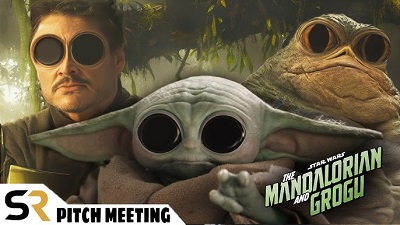
On some level they do understand this which is why they spammed Baby Yoda / Grogu everywhere for years and bait people with Hayden Christensen returning. That just isn’t enough.
I just think “good characters” for anything goes without saying. What makes a character good?
For story and setting to prop up the characters, that context has to be a strong, interesting foundation. Yes, we watch for Luthen and Dedra and Syril but you come up with characters like that from mining the conceits more thoroughly than genre; asking the historical questions of spycraft, funding, ideologies, and caring about bureaucracies. They are not conceived in a vacuum. How do you open up the archetypes past space knight, scoundrel, rebel, or fascist? In Andor, there is more room for more corners of human existence because it is interested in different questions. Think about the Mothmas. People have families! How have traditions shaped generational relations? And Ferrix… you create Ferrix and all its different characters as a community, because you’re fundamentally interested in community; its role in times of change and upheaval. And we care about all of that because there is truth in all of those conceits for us to latch onto, even without the language to articulate or specific knowledge to reference.¹
My only assertion is that history in a “Wars” themed canvas has proven to be the most thoughtful approach in generating new, specifically truthful avenues for story. Otherwise yeah, we will always be running back an evil Empire and rebels, because That’s The Genre™, Right?
¹ For example, it feels intuitive that Mandalorian culture should eventually destroy itself as depicted throughout Mandalorian season 1, and the arc should theoretically be setting Din up for a break with what’s essentially a cult. I think that’s what everyone thought was happening. That is historical based thinking – just completely whiffed on because that’s just not at all how it’s being conceptualized by those writers / Filoni. They’re a marketable brand element. The coolest toys. They’re just like the Original Trilogy™ Boba Fett guy. That’s working “character-first” [sic] in some way, ironically.