logo Sign In

'The Mandalorian & Grogu' (Upcoming Movie) - General Discussion Thread — Page 6

Author
Time

microfoil77 said:

I would be down for a franchise reboot with a writing team on the level of Gilroy’s crew. Spiritually continuing SW for a new era by clearing out years of cruft, reviving the EU elements that worked and mixing them with compelling original content which takes inspiration from historical events and non-SW culture. That last bit is crucial; it is a major reason why the OT still stands as tall as it does after a half century.

No thanks, this would turn out bad

Author
Time
 (Edited)

With “historical events” people are going to turn to World War 2 and Hitler every single time, which is exactly what Andor did, and it’s the most uninteresting thing about Andor. Returning to the well of World War 2 to reboot Star Wars is redundant, because Star Wars is already the pop culture mythology version of World War 2. Anything you take from World War 2 to put into Star Wars is going to be filtered through Star Wars, an ouroboros of Star Wars eating itself.

The enduring quality of Star Wars, outside of its aesthetics and incredibly good technical aspects like effects, sound design, and music, is its spirituality. The Rebellion vs. Empire stuff is great backdrop in the original trilogy, but the movies themselves are more about the relatively small main cast of characters, especially Luke and Vader. Even if you can’t do the spiritual elements (there’s solid evidence that very few people can), the most important part will be cool, interesting, compelling characters that people want to watch. Andor had some, and that’s why it was good. If it didn’t have those characters, the “fascism” stuff would be like watching paint dry.

Similarly people didn’t go to the EU for New Republic vs. Empire or Jedi vs. Sith a thousand times, they went for Thrawn, Mara Jade, Darth Plagueis, Revan, Kreia, Kyle Katarn, or anyone they liked from any of the movies.

Author
Time
 (Edited)

Andor definitely didn’t just pull from WWII, and the spy genre it’s playing with has most of its roots in Cold War era stuff if anything. Gilroy is very open about pulling from all over history for revolution either way: Luthen’s whole thing was bolshevism, and many of the moral quandaries presented to Mothma are pulled more from A Place of Greater Safety than Casablanca.

Obviously the Nazi stuff is there, but “pulling from history” is constantly being conflated with just doing the thing with SW paint and that’s never what that means. Something something ewoks as Viet Cong, something something Palpatine was Nixon – no. All beside the point, when we’re talking about the pastiche, Star Wars is all about mixing and matching. Andor is pulling from recurring themes and motifs throughout history, but “Fascism” as a theme reduces what Andor is doing to something didactic. Its real strength is in interpreting a lore book like history, not commenting on it. How do these big [fictional] events spring into motion? How would they, when the world is a real thing with tangible institutions, communities, cultures, and ideas interacting?

So I think you have to be thinking about history when you’re coming up with more. It’s all happened before, in different ways. And you can follow those patterns into interesting new combinations. And that feels like how you get to “new” Star Wars without devolving into brand. Emulate the approach, not the specific influences.

also if your espionage show isn’t a little paint drying you’re making a bad espionage show

Andor: The Rogue One Arc

not a Jedi apologist or a Jedi hater but a secret third thing

Author
Time
 (Edited)

For as much as this film has sparked off any number of conversations and “discourse” about how to “fix” the future of Star Wars before it happens, it feels like so much force-of-habit in the armchair CEO games folks like playing has led to people forgetting: This is effectively Filoni’s company now.

So all the talk about bringing in new creatives, taking new creative approaches, trying to branch out (but still remaining true to the spirit of Star Wars, which is a pretty malleable thing to define in the first place) seems to be rooted in there being a faceless, manipulable bland “other” in the captain’s chair at the company.

But it’s not a “them” in charge. It’s Filoni. And we’ve got about 20 years of evidence as to his approach, and his execution. The Starfighter movie is effectively a tonal reset, and then the next thing after that is going to be a Filoni/Kinberg trilogy, with Kinberg driving that particular tractor trailer to the finish line.

Star Wars is going to be very on rails for the foreseeable future. Dave Filoni as a creative only knows how to patch holes in bad narratives, do bondo work on bad creative decisions, and repurpose other people’s old movies into Star Wars stories you’re already semi-familiar with. The key to his success is a lowered bar and lessened expectations, and a steady, consistent level of “quality” in the hopes most people will just give in and acclimate to it.

What’s most likely going to happen is people will do just that, and in about 10 years people will look back on “The Early Disney Days” and wish for the sort of wild chances and experiments that resulted in unique filmmaking vs the staid, pat, standard and safe Lucas-karaoke they’ve been getting via Filoni’s stewardship, regardless how successful it ends up ultimately being (and it will likely end up being successful despite it’s mediocre quality)

Joe’s Bed-Stuy Editing Bay - We Cut Flicks

Author
Time

I disagree with all these “suggestions.” Those will also fail to bring audiences in like in the Lucas era. Again, what made Star Wars special was INNOVATION. Lucas pushed for it. Relentlessly. None of these fools at Lucasfilm have the courage or imagination to push for innovation, both imaginatively and technologically. Plus no one has a story to tell. It’s mostly just play it safe rubbish.

Author
Time
 (Edited)

NFBisms said:

Andor definitely didn’t just pull from WWII, and the spy genre it’s playing with has most of its roots in Cold War era stuff if anything. Gilroy is very open about pulling from all over history for revolution either way: Luthen’s whole thing was bolshevism, and many of the moral quandaries presented to Mothma are pulled more from A Place of Greater Safety than Casablanca.

Obviously the Nazi stuff is there, but “pulling from history” is constantly being conflated with just doing the thing with SW paint and that’s never what that means. Something something ewoks as Viet Cong, something something Palpatine was Nixon – no. All beside the point, when we’re talking about the pastiche, Star Wars is all about mixing and matching. Andor is pulling from recurring themes and motifs throughout history, but “Fascism” as a theme reduces what Andor is doing to something didactic. Its real strength is in interpreting a lore book like history, not commenting on it. How do these big [fictional] events spring into motion? How would they, when the world is a real thing with tangible institutions, communities, cultures, and ideas interacting?

So I think you have to be thinking about history when you’re coming up with more. It’s all happened before, in different ways. And you can follow those patterns into interesting new combinations. And that feels like how you get to “new” Star Wars without devolving into brand. Emulate the approach, not the specific influences.

also if your espionage show isn’t a little paint drying you’re making a bad espionage show

The mixing and matching is the paint, it is the genre. Also it doesn’t help that Gilroy and whoever have also been telling everyone that the ripped from the headlines stuff is completely intentional.

The part you touched on that I agree with is that Andor had strong worldbuilding and tried to think through the logistics of the fictional world, but I don’t think that’s necessarily what people mean when they say they want to draw from history. Again the interesting part is the characters. It’s very weak if you pre-suppose revolutionary communism or any revolutionary ideology, trying to educate the watcher about what “the good guys” are like or “this is how this situation alllllways goes.” The good part is Luthen. You need to have the context around Luthen for it to make sense, but Luthen is the reason you watch it. Same with Syril and Deedra and the rest. The world exists to support the characters, not the other way around. You might say something like “these are the kinds of people and archetypes that this kind of world would produce.” Sure, that’s fair, but you have to keep in mind that that’s what makes it compelling, not the world itself. The one exception I could think of would be the prison arc and watching to see how the escape goes, but even that draws you in using specific characters.

On some level they do understand this which is why they spammed Baby Yoda / Grogu everywhere for years and bait people with Hayden Christensen returning. That just isn’t enough.

Author
Time

A very similar example would be Star Trek Deep Space Nine. Great worldbuilding, dark, gritty, realistic take on a usually bright setting, historical inspirations, etc. but you watch it because of Sisko, Odo, Quark, Garak, Dax, Kira, Gul Dukat, and so on. They’re archetypes produced by the premise of the setting, but without them it wouldn’t have any staying power or entertainment value.

Author
Time

My biggest question after seeing this is “why?”.

Why did we need this story (as a feature film). I can hardly see how this one will have any relevance in the bigger picture - the talked about movie in the future with Thrawn.

It was an OK sidequest at best. But all the monsters got boring after a while. When the white one came in the end my reaction was “ugh… another one??”.

As I said - OK. Nothing more, nothing less. Will not watch again.

Faneditors - I salute you.

Author
Time

Star Wars is billions-of-dollars-level relevant when it’s a universal story that goes to the heart of the conflicts within people’s souls. It doesn’t have to have the clever writing of Andor, it doesn’t have to be realistic, it doesn’t have to have good “”“plot”“”. Plot, creatures, world-building, clever writing, etc. etc. are good things to have, but what it really has to do is touch people on a spiritual level (on a deep psychological level, if you prefer). And it’s a fairy tale. Disney keeps cancelling projects that do precisely that.

reylo?

Author
Time
 (Edited)

Vladius said:
it doesn’t help that Gilroy and whoever have also been telling everyone that the ripped from the headlines stuff is completely intentional.

This is actually the opposite of what he’s always maintained. Even with his more recent outspoken-ness on his personal positions, he has always asserted never trying to pull from the headlines. Again, it’s just history and reoccurring patterns. You can draw the connections and he will even agree with them, but he’s always talking about how far back he was conceptualizing the show and the historical books and podcasts he was into when Kennedy called him up. It’s not coincidence, but it’s not intentional.

The part you touched on that I agree with is that Andor had strong worldbuilding and tried to think through the logistics of the fictional world, but I don’t think that’s necessarily what people mean when they say they want to draw from history. Again the interesting part is the characters. It’s very weak if you pre-suppose revolutionary communism or any revolutionary ideology, trying to educate the watcher about what “the good guys” are like or “this is how this situation alllllways goes.” The good part is Luthen. You need to have the context around Luthen for it to make sense, but Luthen is the reason you watch it. Same with Syril and Deedra and the rest. The world exists to support the characters, not the other way around. You might say something like “these are the kinds of people and archetypes that this kind of world would produce.” Sure, that’s fair, but you have to keep in mind that that’s what makes it compelling, not the world itself. The one exception I could think of would be the prison arc and watching to see how the escape goes, but even that draws you in using specific characters.

On some level they do understand this which is why they spammed Baby Yoda / Grogu everywhere for years and bait people with Hayden Christensen returning. That just isn’t enough.

I just think “good characters” for anything goes without saying. What makes a character good?

For story and setting to prop up the characters, that context has to be a strong, interesting foundation. Yes, we watch for Luthen and Dedra and Syril but you come up with characters like that from mining the conceits more thoroughly than genre; asking the historical questions of spycraft, funding, ideologies, and caring about bureaucracies. They are not conceived in a vacuum. How do you open up the archetypes past space knight, scoundrel, rebel, or fascist? In Andor, there is more room for more corners of human existence because it is interested in different questions. Think about the Mothmas. People have families! How have traditions shaped generational relations? And Ferrix… you create Ferrix and all its different characters as a community, because you’re fundamentally interested in community; its role in times of change and upheaval. And we care about all of that because there is truth in all of those conceits for us to latch onto, even without the language to articulate or specific knowledge to reference.¹

My only assertion is that history in a “Wars” themed canvas has proven to be the most thoughtful approach in generating new, specifically truthful avenues for story. Otherwise yeah, we will always be running back an evil Empire and rebels, because That’s The Genre™, Right?

¹ For example, it feels intuitive that Mandalorian culture should eventually destroy itself as depicted throughout Mandalorian season 1, and the arc should theoretically be setting Din up for a break with what’s essentially a cult. I think that’s what everyone thought was happening. That is historical based thinking – just completely whiffed on because that’s just not at all how it’s being conceptualized by those writers / Filoni. They’re a marketable brand element. The coolest toys. They’re just like the Original Trilogy™ Boba Fett guy. That’s working “character-first” [sic] in some way, ironically.

Andor: The Rogue One Arc

not a Jedi apologist or a Jedi hater but a secret third thing

Author
Time

NFBisms said:

Vladius said:
it doesn’t help that Gilroy and whoever have also been telling everyone that the ripped from the headlines stuff is completely intentional.

This is actually the opposite of what he’s always maintained. Even with his more recent outspoken-ness on his personal positions, he has always asserted never trying to pull from the headlines. Again, it’s just history and reoccurring patterns. You can draw the connections and he will even agree with them, but he’s always talking about how far back he was conceptualizing the show and the historical books and podcasts he was into when Kennedy called him up. It’s not coincidence, but it’s not intentional.

The part you touched on that I agree with is that Andor had strong worldbuilding and tried to think through the logistics of the fictional world, but I don’t think that’s necessarily what people mean when they say they want to draw from history. Again the interesting part is the characters. It’s very weak if you pre-suppose revolutionary communism or any revolutionary ideology, trying to educate the watcher about what “the good guys” are like or “this is how this situation alllllways goes.” The good part is Luthen. You need to have the context around Luthen for it to make sense, but Luthen is the reason you watch it. Same with Syril and Deedra and the rest. The world exists to support the characters, not the other way around. You might say something like “these are the kinds of people and archetypes that this kind of world would produce.” Sure, that’s fair, but you have to keep in mind that that’s what makes it compelling, not the world itself. The one exception I could think of would be the prison arc and watching to see how the escape goes, but even that draws you in using specific characters.

On some level they do understand this which is why they spammed Baby Yoda / Grogu everywhere for years and bait people with Hayden Christensen returning. That just isn’t enough.

I just think “good characters” for anything goes without saying. What makes a character good?

For story and setting to prop up the characters, that context has to be a strong, interesting foundation. Yes, we watch for Luthen and Dedra and Syril but you come up with characters like that from mining the conceits more thoroughly than genre; asking the historical questions of spycraft, funding, ideologies, and caring about bureaucracies. They are not conceived in a vacuum. How do you open up the archetypes past space knight, scoundrel, rebel, or fascist? In Andor, there is more room for more corners of human existence because it is interested in different questions. Think about the Mothmas. People have families! How have traditions shaped generational relations? And Ferrix… you create Ferrix and all its different characters as a community, because you’re fundamentally interested in community; its role in times of change and upheaval. And we care about all of that because there is truth in all of those conceits for us to latch onto, even without the language to articulate or specific knowledge to reference.¹

My only assertion is that history in a “Wars” themed canvas has proven to be the most thoughtful approach in generating new, specifically truthful avenues for story. Otherwise yeah, we will always be running back an evil Empire and rebels, because That’s The Genre™, Right?

¹ For example, it feels intuitive that Mandalorian culture should eventually destroy itself as depicted throughout Mandalorian season 1, and the arc should theoretically be setting Din up for a break with what’s essentially a cult. I think that’s what everyone thought was happening. That is historical based thinking – just completely whiffed on because that’s just not at all how it’s being conceptualized by those writers / Filoni. They’re a marketable brand element. The coolest toys. They’re just like the Original Trilogy™ Boba Fett guy. That’s working “character-first” [sic] in some way, ironically.

It’s a chicken and egg kind of thing for sure. But Mon Mothma and some of the side characters are some of the less interesting parts of the show. The wedding subplot goes nowhere. She had more hype from appearing in Return of the Jedi and a Revenge of the Sith deleted scene for 1-2 minutes, and some video games, than the entirety of Andor. The only people who would disagree with that are interested in her because she’s Nancy Pelosi or something. The Ferrix people are mainly to provide emotional stakes and backdrop for Cassian.

The main characters are generally spies, soldiers/commandos, and officers, which aren’t really new to Star Wars. The most original character for showing an ordinary person’s life would be Syril. He’s not a typical imperial character since he’s somewhere between a civilian and an actual part of the Empire, mediated through the corporate sector, and he deals with the struggles of getting jobs and striving for a career.

Author
Time
 (Edited)

The wedding subplot demonstrated how far Mon would go for the cause (giving up her child, sacrificing her childhood friend, etc) and the toll it took on her. It was part of the stripping away of everything that she eventually goes through, as she ends up in plain clothes, with a plain haircut, sitting in the outdoors at a picnic table in a jungle. I don’t know why you think that contrast with how she started the series counts as going nowhere.

JEDIT: I have more to say

The Ferrix crew demonstrate that anyone can resist and rebel, not just extraordinary people like Cass.

ROTJ Storyboard Reconstruction Project

Author
Time

Vladius said:

NFBisms said:

Vladius said:
it doesn’t help that Gilroy and whoever have also been telling everyone that the ripped from the headlines stuff is completely intentional.

This is actually the opposite of what he’s always maintained. Even with his more recent outspoken-ness on his personal positions, he has always asserted never trying to pull from the headlines. Again, it’s just history and reoccurring patterns. You can draw the connections and he will even agree with them, but he’s always talking about how far back he was conceptualizing the show and the historical books and podcasts he was into when Kennedy called him up. It’s not coincidence, but it’s not intentional.

The part you touched on that I agree with is that Andor had strong worldbuilding and tried to think through the logistics of the fictional world, but I don’t think that’s necessarily what people mean when they say they want to draw from history. Again the interesting part is the characters. It’s very weak if you pre-suppose revolutionary communism or any revolutionary ideology, trying to educate the watcher about what “the good guys” are like or “this is how this situation alllllways goes.” The good part is Luthen. You need to have the context around Luthen for it to make sense, but Luthen is the reason you watch it. Same with Syril and Deedra and the rest. The world exists to support the characters, not the other way around. You might say something like “these are the kinds of people and archetypes that this kind of world would produce.” Sure, that’s fair, but you have to keep in mind that that’s what makes it compelling, not the world itself. The one exception I could think of would be the prison arc and watching to see how the escape goes, but even that draws you in using specific characters.

On some level they do understand this which is why they spammed Baby Yoda / Grogu everywhere for years and bait people with Hayden Christensen returning. That just isn’t enough.

I just think “good characters” for anything goes without saying. What makes a character good?

For story and setting to prop up the characters, that context has to be a strong, interesting foundation. Yes, we watch for Luthen and Dedra and Syril but you come up with characters like that from mining the conceits more thoroughly than genre; asking the historical questions of spycraft, funding, ideologies, and caring about bureaucracies. They are not conceived in a vacuum. How do you open up the archetypes past space knight, scoundrel, rebel, or fascist? In Andor, there is more room for more corners of human existence because it is interested in different questions. Think about the Mothmas. People have families! How have traditions shaped generational relations? And Ferrix… you create Ferrix and all its different characters as a community, because you’re fundamentally interested in community; its role in times of change and upheaval. And we care about all of that because there is truth in all of those conceits for us to latch onto, even without the language to articulate or specific knowledge to reference.¹

My only assertion is that history in a “Wars” themed canvas has proven to be the most thoughtful approach in generating new, specifically truthful avenues for story. Otherwise yeah, we will always be running back an evil Empire and rebels, because That’s The Genre™, Right?

¹ For example, it feels intuitive that Mandalorian culture should eventually destroy itself as depicted throughout Mandalorian season 1, and the arc should theoretically be setting Din up for a break with what’s essentially a cult. I think that’s what everyone thought was happening. That is historical based thinking – just completely whiffed on because that’s just not at all how it’s being conceptualized by those writers / Filoni. They’re a marketable brand element. The coolest toys. They’re just like the Original Trilogy™ Boba Fett guy. That’s working “character-first” [sic] in some way, ironically.

It’s a chicken and egg kind of thing for sure. But Mon Mothma and some of the side characters are some of the less interesting parts of the show. The wedding subplot goes nowhere. She had more hype from appearing in Return of the Jedi and a Revenge of the Sith deleted scene for 1-2 minutes, and some video games, than the entirety of Andor. The only people who would disagree with that are interested in her because she’s Nancy Pelosi or something. The Ferrix people are mainly to provide emotional stakes and backdrop for Cassian.

The main characters are generally spies, soldiers/commandos, and officers, which aren’t really new to Star Wars. The most original character for showing an ordinary person’s life would be Syril. He’s not a typical imperial character since he’s somewhere between a civilian and an actual part of the Empire, mediated through the corporate sector, and he deals with the struggles of getting jobs and striving for a career.

Just a data point for you: I found Mon extremely compelling throughout the show and I couldn’t give a @#$% about Nancy Pelosi (or ROTS deleted scenes for that matter).

Author
Time

Likewise. Mon Mothma’s character is interesting, in part, because she’s in such a different place from the other characters in the show. At the beginning of the show, she’s in a position of relative prestige and power within the Empire (although that is fading), yet opposes the Empire. Over the course of the show, she increasingly has to grapple with the question of what that opposition means, eventually ending up on a remote moon, entirely apart from the world she once knew. She’s a bit of a fencesitter, but she shows great strength of character.

The wedding subplot is crucial for her character development. That’s where she breaks, realizing how deeply she’s been drawn into rebel activity and what the ramifications are for her personal life.

Author
Time
 (Edited)

Yeah, if anything the “Nancy Pelosi” element of her character is what she has to let go of over the course of the show. (Arguably given up on by the start of the show anyway). It’s just not enough, and what is, destroys whatever life and comfort she might have had.

Vladius said:
The main characters are generally spies, soldiers/commandos, and officers, which aren’t really new to Star Wars. The most original character for showing an ordinary person’s life would be Syril. He’s not a typical imperial character since he’s somewhere between a civilian and an actual part of the Empire, mediated through the corporate sector, and he deals with the struggles of getting jobs and striving for a career.

Not new for like, The Clone Wars or the books, but in conversation with just the movies - to dig into what a spy, soldier, or officer navigates in a conflict like this is novel. Tony Gilroy isn’t engaging with the aforementioned media, but he’s comes to those same conceits in parallel. It’s all historical thinking.

Andor: The Rogue One Arc

not a Jedi apologist or a Jedi hater but a secret third thing

Author
Time
 (Edited)

When I say hype, I mean in the broader fan base, not among people here.

When I say the wedding, I mean that the moment she lets her daughter marry the sketchy guy’s son is the last relevant choice she makes where she shows real agency. The rest of it is just watching the wedding for multiple episodes. The tone is unclear and it seems like you’re supposed to be disturbed by the wedding but nothing about it is really disturbing, other than Mon not liking it. Ooh a cultural tradition! Marriage!!! Scary!! Ahhh!!! Her daughter isn’t even unhappy. She likes the guy she’s marrying and she likes her own culture, so the only conflict is Mon’s petty feelings about it, which has nothing to do with anything else in the show at that point. Luthen and crew kill off her friend for her, and that detail could have happened without the wedding.

The set and costume design is neat and it’s understandable to want to see a different side of the setting, but it’s just a dancing meme in the end.

Author
Time

Vladius said:

When I say hype, I mean in the broader fan base, not among people here.

When I say the wedding, I mean that the moment she lets her daughter marry the sketchy guy’s son is the last relevant choice she makes where she shows real agency. The rest of it is just watching the wedding for multiple episodes. The tone is unclear and it seems like you’re supposed to be disturbed by the wedding but nothing about it is really disturbing, other than Mon not liking it. Ooh a cultural tradition! Marriage!!! Scary!! Ahhh!!! Her daughter isn’t even unhappy. She likes the guy she’s marrying and she likes her own culture, so the only conflict is Mon’s petty feelings about it, which has nothing to do with anything else in the show at that point. Luthen and crew kill off her friend for her, and that detail could have happened without the wedding.

The set and costume design is neat and it’s understandable to want to see a different side of the setting, but it’s just a dancing meme in the end.

Do you think Perrin is giving good advice when he says that, despite the world’s troubles, the key to life is seeking out the pleasure of a nice dinner party? It’s emblematic of Perrin’s life, and the life Lieda is embracing. Contrast that with Mon’s life, and maybe you’ll see why the wedding matters.

ROTJ Storyboard Reconstruction Project

Author
Time

timdiggerm said:

Vladius said:

When I say hype, I mean in the broader fan base, not among people here.

When I say the wedding, I mean that the moment she lets her daughter marry the sketchy guy’s son is the last relevant choice she makes where she shows real agency. The rest of it is just watching the wedding for multiple episodes. The tone is unclear and it seems like you’re supposed to be disturbed by the wedding but nothing about it is really disturbing, other than Mon not liking it. Ooh a cultural tradition! Marriage!!! Scary!! Ahhh!!! Her daughter isn’t even unhappy. She likes the guy she’s marrying and she likes her own culture, so the only conflict is Mon’s petty feelings about it, which has nothing to do with anything else in the show at that point. Luthen and crew kill off her friend for her, and that detail could have happened without the wedding.

The set and costume design is neat and it’s understandable to want to see a different side of the setting, but it’s just a dancing meme in the end.

Do you think Perrin is giving good advice when he says that, despite the world’s troubles, the key to life is seeking out the pleasure of a nice dinner party? It’s emblematic of Perrin’s life, and the life Lieda is embracing. Contrast that with Mon’s life, and maybe you’ll see why the wedding matters.

Are you saying that that’s supposed to be a life lesson for the audience, or stakes for the plot?

Author
Time

Vladius said:

timdiggerm said:

Vladius said:

When I say hype, I mean in the broader fan base, not among people here.

When I say the wedding, I mean that the moment she lets her daughter marry the sketchy guy’s son is the last relevant choice she makes where she shows real agency. The rest of it is just watching the wedding for multiple episodes. The tone is unclear and it seems like you’re supposed to be disturbed by the wedding but nothing about it is really disturbing, other than Mon not liking it. Ooh a cultural tradition! Marriage!!! Scary!! Ahhh!!! Her daughter isn’t even unhappy. She likes the guy she’s marrying and she likes her own culture, so the only conflict is Mon’s petty feelings about it, which has nothing to do with anything else in the show at that point. Luthen and crew kill off her friend for her, and that detail could have happened without the wedding.

The set and costume design is neat and it’s understandable to want to see a different side of the setting, but it’s just a dancing meme in the end.

Do you think Perrin is giving good advice when he says that, despite the world’s troubles, the key to life is seeking out the pleasure of a nice dinner party? It’s emblematic of Perrin’s life, and the life Lieda is embracing. Contrast that with Mon’s life, and maybe you’ll see why the wedding matters.

Are you saying that that’s supposed to be a life lesson for the audience, or stakes for the plot?

I’m saying that there is a lot more to Andor than just the plot, yes. The plot itself is subservient to the issues and values Gilroy wanted to explore.

ROTJ Storyboard Reconstruction Project

Author
Time

timdiggerm said:

Vladius said:

timdiggerm said:

Vladius said:

When I say hype, I mean in the broader fan base, not among people here.

When I say the wedding, I mean that the moment she lets her daughter marry the sketchy guy’s son is the last relevant choice she makes where she shows real agency. The rest of it is just watching the wedding for multiple episodes. The tone is unclear and it seems like you’re supposed to be disturbed by the wedding but nothing about it is really disturbing, other than Mon not liking it. Ooh a cultural tradition! Marriage!!! Scary!! Ahhh!!! Her daughter isn’t even unhappy. She likes the guy she’s marrying and she likes her own culture, so the only conflict is Mon’s petty feelings about it, which has nothing to do with anything else in the show at that point. Luthen and crew kill off her friend for her, and that detail could have happened without the wedding.

The set and costume design is neat and it’s understandable to want to see a different side of the setting, but it’s just a dancing meme in the end.

Do you think Perrin is giving good advice when he says that, despite the world’s troubles, the key to life is seeking out the pleasure of a nice dinner party? It’s emblematic of Perrin’s life, and the life Lieda is embracing. Contrast that with Mon’s life, and maybe you’ll see why the wedding matters.

Are you saying that that’s supposed to be a life lesson for the audience, or stakes for the plot?

I’m saying that there is a lot more to Andor than just the plot, yes. The plot itself is subservient to the issues and values Gilroy wanted to explore.

Is it explored, though? That’s what I’m saying, any way you slice it nothing happens. Perrin’s wife leaves their loveless marriage to be a rebel, which she was doing anyway. Lieda gets to be a normal rich person, which was going to happen anyway. There aren’t any negative consequences for them that go beyond that. Do you really need that many episodes to dunk on epicureanism, by showing a neutral cultural event?

Author
Time
 (Edited)

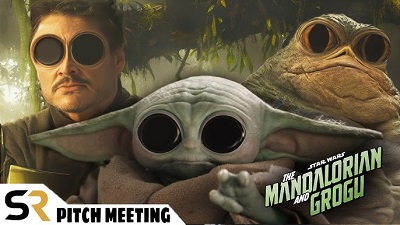
Pitch Meeting, like Honest Trailers, usually has some on-point remarks & stripped-down insights on various GFFA content…
 

The Mandalorian and Grogu Pitch Meeting

www.youtube.com/watch?v=Zg2568eaIvY - a 6 minute video from the Pitch Meeting youtube channel.
 

The blurb: 'After two seasons of his own show, and then a season of another show, and then another season of his own show, Mando is back! This time, in a movie! Because why not? Why not???

The Mandalorian and Grogu is a movie that exists and raises some questions. Like why was this a movie? How much of this movie takes place in pits? Who the hell is Grogu?’
 

A little patience goes a long way on this old-school Rebel base. If you are having issues finding what you are looking for, these will be of some help…

Welcome to the OriginalTrilogy.com | Introduce yourself in here | Useful info within : About : Help : Site Rules : Fan Project Rules : Announcements
‘How do I do this?’ on the OriginalTrilogy.com - includes info on how to ask for a fan project and how to search for projects and threads on OT•com.

We’re a community here - not ‘a download site’ - so join in with the discussions: do NOT lazily make ‘link request’ posts / new threads asking for projects.

Author
Time
 (Edited)

Vladius said:

timdiggerm said:

Vladius said:

timdiggerm said:

Vladius said:

When I say hype, I mean in the broader fan base, not among people here.

When I say the wedding, I mean that the moment she lets her daughter marry the sketchy guy’s son is the last relevant choice she makes where she shows real agency. The rest of it is just watching the wedding for multiple episodes. The tone is unclear and it seems like you’re supposed to be disturbed by the wedding but nothing about it is really disturbing, other than Mon not liking it. Ooh a cultural tradition! Marriage!!! Scary!! Ahhh!!! Her daughter isn’t even unhappy. She likes the guy she’s marrying and she likes her own culture, so the only conflict is Mon’s petty feelings about it, which has nothing to do with anything else in the show at that point. Luthen and crew kill off her friend for her, and that detail could have happened without the wedding.

The set and costume design is neat and it’s understandable to want to see a different side of the setting, but it’s just a dancing meme in the end.

Do you think Perrin is giving good advice when he says that, despite the world’s troubles, the key to life is seeking out the pleasure of a nice dinner party? It’s emblematic of Perrin’s life, and the life Lieda is embracing. Contrast that with Mon’s life, and maybe you’ll see why the wedding matters.

Are you saying that that’s supposed to be a life lesson for the audience, or stakes for the plot?

I’m saying that there is a lot more to Andor than just the plot, yes. The plot itself is subservient to the issues and values Gilroy wanted to explore.

Is it explored, though? That’s what I’m saying, any way you slice it nothing happens. Perrin’s wife leaves their loveless marriage to be a rebel, which she was doing anyway. Lieda gets to be a normal rich person, which was going to happen anyway. There aren’t any negative consequences for them that go beyond that. Do you really need that many episodes to dunk on epicureanism, by showing a neutral cultural event?

I think you keep trapping the discussion into didactism/messaging/progression, but being about something isn’t disguised lecture, and storytelling isn’t just efficient communication.

There’s nothing here about epicureanism substantially; the Mothma wealth functions the same as Cassian’s sister, and ~tradition is only the means to the emotional grounding of the situation… not about conservatism substantially, but a mother losing her daughter to a pragmatic calculation she made. These aren’t messaging dunks, they are themes inside of a larger Story about like you’ve yourself said, the characters!

All of this was always going to happen, sure, but the Story™ is just that Mon hadn’t confronted any of that reality prior to the arc. She’s constantly on the fence throughout the show thinking she can be both Nancy Pelosi and Dr. Abdullah from A Most Wanted Man. Can she maintain her family and liberal principles in the imperial status-quo, while also being a revolutionary? We all know before she does the answer to that. It’s the season 2 premiere, but it’s frankly the payoff to her whole arc from the start of the show.

So yes it’s all explored! It’s exploring a concept because it’s 3 whole episodes of acting and production and writing! Character dynamics are on display, dialogue exchanges are being had. Micro-investments in the characters are made when you spend time with them in new situations. You’re supposed to be having fun with it. If you’re not getting stuff out of it - obviously it’s subjective - but there are entire genres outside of Star Wars where the point is itself, not justifying itself or contributing to a plot progression, or even the Moral of the Story™. People love Mad Men!

Andor: The Rogue One Arc

not a Jedi apologist or a Jedi hater but a secret third thing

Author
Time

NFBisms said:

Vladius said:

timdiggerm said:

Vladius said:

timdiggerm said:

Vladius said:

When I say hype, I mean in the broader fan base, not among people here.

When I say the wedding, I mean that the moment she lets her daughter marry the sketchy guy’s son is the last relevant choice she makes where she shows real agency. The rest of it is just watching the wedding for multiple episodes. The tone is unclear and it seems like you’re supposed to be disturbed by the wedding but nothing about it is really disturbing, other than Mon not liking it. Ooh a cultural tradition! Marriage!!! Scary!! Ahhh!!! Her daughter isn’t even unhappy. She likes the guy she’s marrying and she likes her own culture, so the only conflict is Mon’s petty feelings about it, which has nothing to do with anything else in the show at that point. Luthen and crew kill off her friend for her, and that detail could have happened without the wedding.

The set and costume design is neat and it’s understandable to want to see a different side of the setting, but it’s just a dancing meme in the end.

Do you think Perrin is giving good advice when he says that, despite the world’s troubles, the key to life is seeking out the pleasure of a nice dinner party? It’s emblematic of Perrin’s life, and the life Lieda is embracing. Contrast that with Mon’s life, and maybe you’ll see why the wedding matters.

Are you saying that that’s supposed to be a life lesson for the audience, or stakes for the plot?

I’m saying that there is a lot more to Andor than just the plot, yes. The plot itself is subservient to the issues and values Gilroy wanted to explore.

Is it explored, though? That’s what I’m saying, any way you slice it nothing happens. Perrin’s wife leaves their loveless marriage to be a rebel, which she was doing anyway. Lieda gets to be a normal rich person, which was going to happen anyway. There aren’t any negative consequences for them that go beyond that. Do you really need that many episodes to dunk on epicureanism, by showing a neutral cultural event?

I think you keep trapping the discussion into didactism/messaging/progression, but being about something isn’t disguised lecture, and storytelling isn’t just efficient communication.

There’s nothing here about epicureanism substantially; the Mothma wealth functions the same as Cassian’s sister, and ~tradition is only the means to the emotional grounding of the situation… not about conservatism substantially, but a mother losing her daughter to a pragmatic calculation she made. These aren’t messaging dunks, they are themes inside of a larger Story about like you’ve yourself said, the characters!

All of this was always going to happen, sure, but the Story™ is just that Mon hadn’t confronted any of that reality prior to the arc. She’s constantly on the fence throughout the show thinking she can be both Nancy Pelosi and Dr. Abdullah from A Most Wanted Man. Can she maintain her family and liberal principles in the imperial status-quo, while also being a revolutionary? We all know before she does the answer to that. It’s the season 2 premiere, but it’s frankly the payoff to her whole arc from the start of the show.

So yes it’s all explored! It’s exploring a concept because it’s 3 whole episodes of acting and production and writing! Character dynamics are on display, dialogue exchanges are being had. Micro-investments in the characters are made when you spend time with them in new situations. You’re supposed to be having fun with it. If you’re not getting stuff out of it - obviously it’s subjective - but there are entire genres outside of Star Wars where the point is itself, not justifying itself or contributing to a plot progression, or even the Moral of the Story™. People love Mad Men!

She did confront the reality when she made the choice to trade her daughter getting married in exchange for the financial fixing. That’s the payoff of an existing arc in season 1. Watching the wedding itself is redundant. Like I said I enjoyed the costumes and set design, but the writing and execution is just too indulgent. The time spent on it could be spent on some of the events that get skipped over in the year to year jumps. You could make the case that Mon herself is an interesting character, but the others are all supporting characters to her and not really enough on their own.

The real hard break is when her friend is killed off by Luthen’s people, then again when she’s rescued by Cassian and has to deal with being shot at and seeing people shot.

And it does come across as a disguised lecture. The two major POV characters we have (Mon and her cousin) both disapprove of it, with the only caveat being that Mon is a little bit too heavy handed with trying to talk her daughter out of it. The rich person dialogue is very one note, ooh, look how rich and comfortable these people are. The ritual is supposed to be creepy and ominous, and the part where the groom cuts Leida’s braid is given a hard cut like she got killed by a horror movie slasher.

Author
Time
 (Edited)

Vladius said:
And it does come across as a disguised lecture. The two major POV characters we have (Mon and her cousin) both disapprove of it, with the only caveat being that Mon is a little bit too heavy handed with trying to talk her daughter out of it. The rich person dialogue is very one note, ooh, look how rich and comfortable these people are. The ritual is supposed to be creepy and ominous, and the part where the groom cuts Leida’s braid is given a hard cut like she got killed by a horror movie slasher.

How is any of that substantive as commentary, but the surrounding story elements are overindulgent? There isn’t even really “rich person dialogue” ala Succession in the way you describe - most of the scenes are between the main players and Mon’s family. The juice of those interactions is secretly navigating around the surrounding context, and the fraught interpersonal relationships in that double-context. Hell, I don’t even think the notable Perrin speech is even an outright indictment of him - if anything it humanizes him and rounds out his character. He’s not happy with the arrangement either!¹

It’s not even a real culture to critique, if it’s meant to be lecture (which, again, is still beyond what most media is actually doing sans after school specials). What’s supposed to be hard about this for Mon and Perrin is the “selling their child” part of it, not the idea of tradition itself. Certainly not in a show where those are threatened by a pointedly secular Empire weaponizing customs against its various communities.

¹ I could even keep going with Sculdun as a fun character because he’s not from the world of wealth blue-blooded Mon is. but i digress

Andor: The Rogue One Arc

not a Jedi apologist or a Jedi hater but a secret third thing

Author
Time
 (Edited)

NFBisms said:

Vladius said:
And it does come across as a disguised lecture. The two major POV characters we have (Mon and her cousin) both disapprove of it, with the only caveat being that Mon is a little bit too heavy handed with trying to talk her daughter out of it. The rich person dialogue is very one note, ooh, look how rich and comfortable these people are. The ritual is supposed to be creepy and ominous, and the part where the groom cuts Leida’s braid is given a hard cut like she got killed by a horror movie slasher.

How is any of that substantive as commentary, but the surrounding story elements are overindulgent? There isn’t even really “rich person dialogue” ala Succession in the way you describe - most of the scenes are between the main players and Mon’s family. The juice of those interactions is secretly navigating around the surrounding context, and the fraught interpersonal relationships in that double-context. Hell, I don’t even think the notable Perrin speech is even an outright indictment of him - if anything it humanizes him and rounds out his character. He’s not happy with the arrangement either!¹

It’s not even a real culture to critique, if it’s meant to be lecture (which, again, is still beyond what most media is actually doing sans after school specials). What’s supposed to be hard about this for Mon and Perrin is the “selling their child” part of it, not the idea of tradition itself. Certainly not in a show where those are threatened by a pointedly secular Empire weaponizing customs against its various communities.

¹ I could even keep going with Sculdun as a fun character because he’s not from the world of wealth blue-blooded Mon is. but i digress

If I’m remembering correctly there are actually scenes in season 1 and 2 where Mon is uncomfortable with her daughter being into the traditions, and not just because the boy is involved. (I think there’s a part where she’s singing or chanting or something with a bunch of other girls.) It’s part of the clash between her cosmopolitanism as a senator and her native environment, but you can tell that it’s implicit that the audience is expected to lean more on the cosmopolitan side. Which is a fair bet, for the target audience.

The other implicit criticism is that this is all wasteful and decadent because a war is going on. We have revolutionaries dying in the trenches for a galactic war, while these snooty people think they get to have a nice wedding on their home planet and put their heads in the sand. Again, somewhat fair, but we got the point the first time.