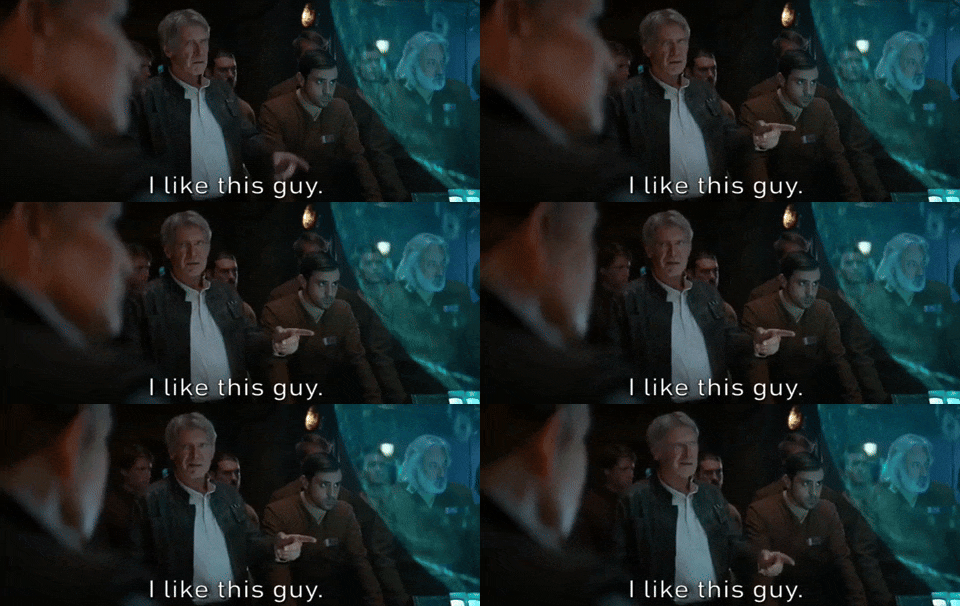
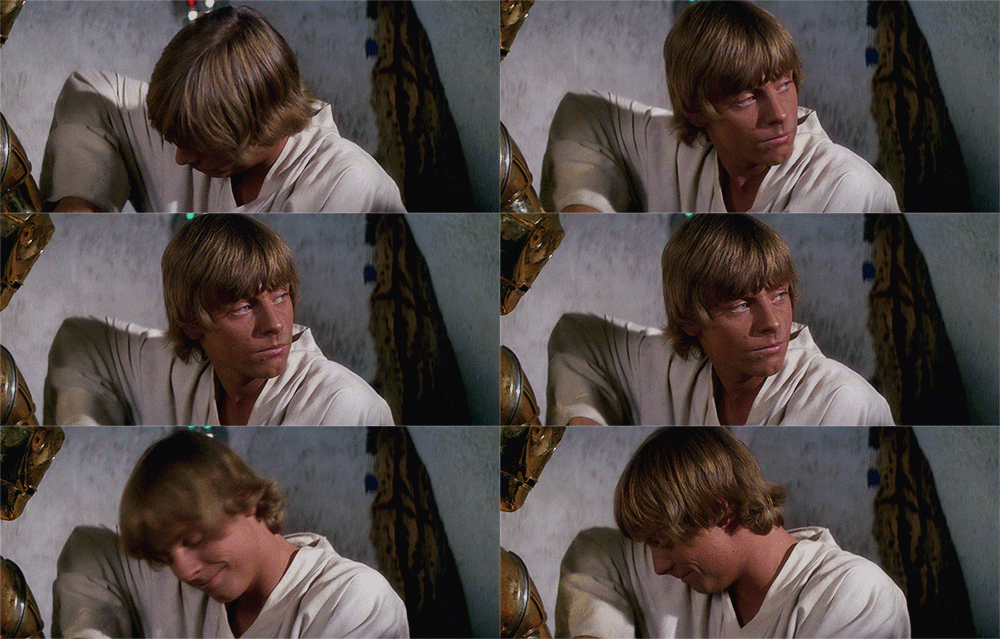
It really does seem as if the people upset that Luke is like this in the story are judging him (and his creators/performers) as harshly as LUKE HIMSELF is IN the story. Only the difference is that Luke learns to allow himself empathy, sympathy, and forgiveness, whereas some of his fans aren’t willing to go that far.
There’s a legitimate anger that this fictional hero was shown to be flawed again, and none of those folks wants to forgive that. People seem to prefer INVALIDATING it entirely, rather than simply disagreeing with it. “Luke makes ONE mistake,” you say. Sure. I’d say he probably makes a bunch of little ones on the way to that big one, much like many relationships don’t fail because of the one big act-out, but the tiny trail of screw-ups that led to it. But even if we account for the idea he only made the one mistake, which was sensing Ben’s slip to the darkside and responding like “oh no, I have to stop him before he kills everybody” for one second - that mistake was a very big one. And it led to his having an entire building dropped on him while this kid went off and slaughtered half his temple, took a bunch of students with him (suggesting to me he’d been making small mistakes up to that point if Ben could so easily convince those students to swing his way) and joined not only the dark side, but wound up running the First Order. The kid became a homicidal maniac like his grandfather. Did Luke spark that? It’s hard to say no. Is Luke responsible for that reaction? A little. But it’s not like Ben Solo is a wind-up toy. He could have chosen, at any point along the way, to stop fighting the light and allow himself the forgiveness and empathy he keeps denying himself. But he doesn’t. And in a lesser, but still hurtful way, neither does Luke. Neither did Anakin. It’s a Skywalker thing, apparently. A stubborn, hurtful, unneccessary Skywalker thing.
Imagine the indignation you have at the idea of your hero failing despite your not wanting him to fail, not imagining he could even do it, and knowing how frustrating and helpless it would make you feel, to have your notions of greatness bruised and even broken. Now imagine you’re the hero. The guy who actually MESSED UP. The man who understands what that pressure means, and still broke under it despite your best efforts, you know for a fact that screw up cost untold number of horrors and deaths. You’d be upset, right? You’d be unforgiving. You’d be angry and disappointed. You’d be, funnily enough, in the exact same headspace Luke is in for much of The Last Jedi.
And by the end of the movie, Luke comes around. But many of his fans can’t. They’re still focused on the failure, and the unfairness of it having happened AT ALL, and that focus prevents them from going on Luke’s journey. The whole thing is forgone because it’s flat out illegitimate, to them. In a way, they never got off Ahch-To island. Their resentment and disgust with Luke is keeping them there, just like it kept HIM there. It prevents them from joining him as he projects his way to Crait for the most impressive single act of Force mastery in all the films.
The Last Jedi is a great empathy test, honestly. It asks the audience how willing they are to forgive people, to look for the good in people despite their biggest flaws. Can you recognize the potential in people, greater and lesser, accomplished and inexeprienced? Can you give part of yourself to those people despite all that, because you know there’s more to them than their failings? It’s not really a bad thing if you can’t do it for all the characters, either. Or that you’re willing to offer more of that empathy and sympathy to Poe, or Rose, than you are to Kylo, or Luke. But the movie takes great care to explain why these people are all acting like this, even if you don’t agree with the actions themselves.
It’s one of the more stubborn contradictions in the myriad responses to The Last Jedi that the people least willing to go where the film wants to go are fans of the man who best embodies the full emotional/mythological journey the film takes.